Year 2 · English · Literature · Book Week 2026 · Free Printable
Year 2 Character & Setting Worksheet
Help Year 2 students find the words and phrases authors use to build characters and settings, then explain what those details help the reader understand and imagine.
Worksheet Preview
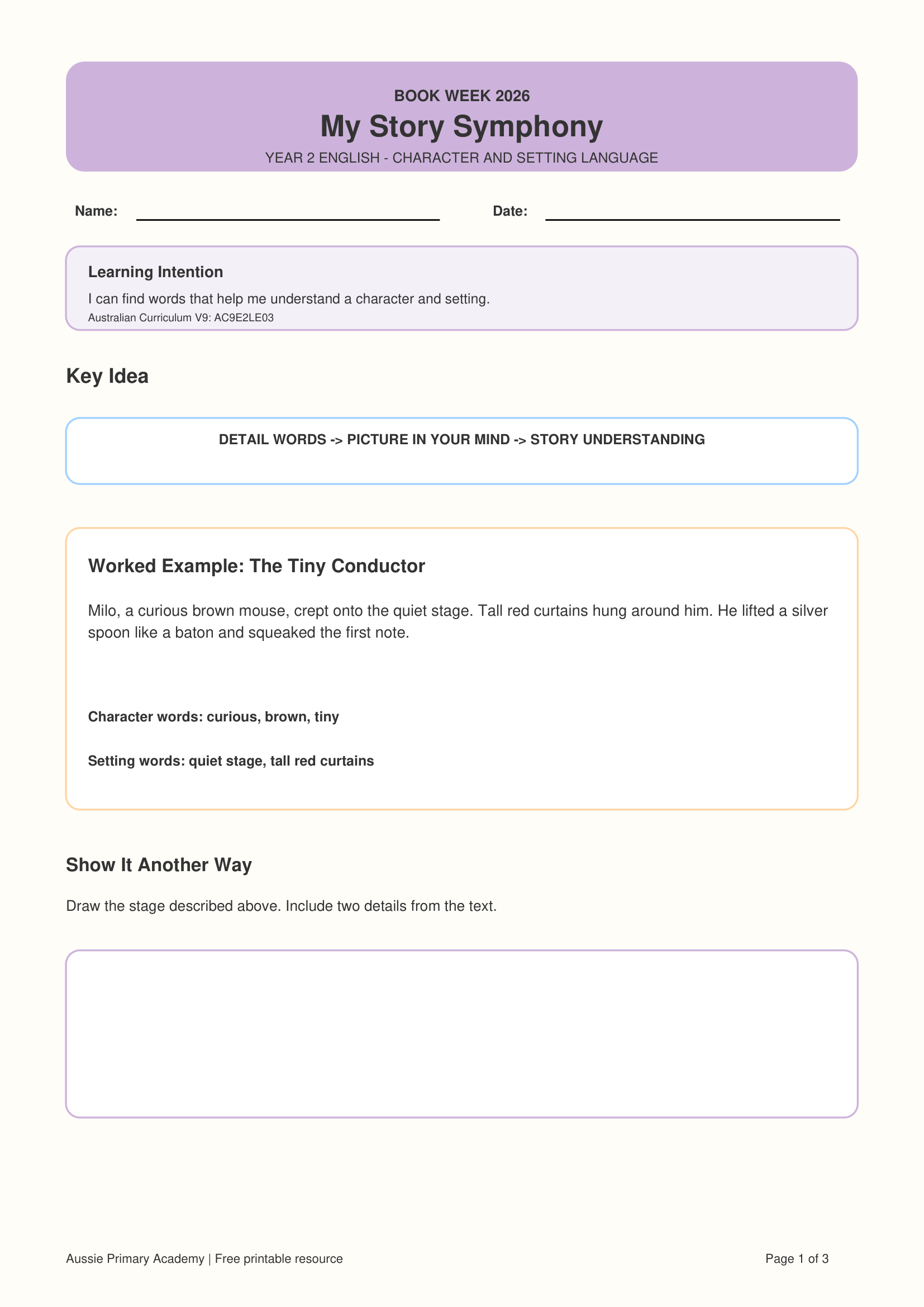
Preview of the first page · Full 3-page PDF includes student activities, answer key and teaching support
About This Year 2 Character & Setting Worksheet
This Year 2 English resource moves students beyond simply naming a character or setting. Students look closely at the words and phrases an author uses to describe people, places and story details.
Students then connect those language clues to what they understand and imagine about the story. This supports reading comprehension, vocabulary development and early evidence-based responses.
It is part of the My Story Symphony – Book Week 2026 collection from Aussie Primary Academy.
Learning Intention
“I can find words that help me understand a character and setting.”
Australian Curriculum V9
AC9E2LE03
Supports students to discuss characters and settings and identify how language presents these features in different ways.
Aussie Primary Academy is an independent publisher and is not endorsed by ACARA.
Skills Practised
- Finding character description
- Finding setting description
- Identifying descriptive words and phrases
- Visualising from language
- Using details from a text
- Explaining ideas with evidence
Teacher / Parent Tip
Model the difference between simply naming a character or place and finding the exact words that create the description.
Ask students to highlight or underline the evidence first, then explain what that detail helps them understand or imagine.
What's Included
- Year 2 learning intention
- Character and setting language focus
- Short literary reading activities
- Descriptive word and phrase identification
- Character evidence questions
- Setting visualisation activities
- Student response opportunities
- Answer key
- Teacher and parent support
Differentiation
Support: Underline one describing word together first, then ask students to find another word or phrase independently.
Core: Students locate descriptive language and explain what it tells them about the character or setting.
Extend: Ask students to replace one descriptive phrase with their own and explain how the new wording changes the picture in the reader's mind.
Why This Helps Readers
Strong readers notice that authors choose words for a reason. Identifying precise character and setting language helps students visualise a story, build vocabulary and begin explaining how authors create meaning.
How to Use This Worksheet
- Whole class: Model how to find a descriptive word and explain what it reveals.
- Guided reading: Highlight character and setting clues together before students answer independently.
- Independent practice: Students locate evidence and explain what the words help them understand or imagine.
- Home learning: Parents can ask, “Which words helped you picture the character or place?”
Frequently Asked Questions
What is the main skill in this worksheet?
Students identify words and phrases that help them understand and visualise characters and settings.
Is an answer key included?
Yes. The resource includes suggested answers and teaching support.
Is this worksheet only for Book Week?
No. The Book Week theme makes it useful for the celebration, but the character-and-setting comprehension skill can be taught throughout the year.
Is this resource free?
Yes. The PDF is free to download and print for learning use.
Free Book Week Bonus
Continue with My Book Week Reading Adventure
Looking for a broader Book Week activity too? Explore the free Foundation–Year 6 reading booklet with story, character, setting, vocabulary, creative response and book recommendation activities.
View the Free F–6 WorkbookExplore the Book Week Story Elements Collection
Choose another year level or continue through the collection.