Year 6 · English · Literature · Book Week 2026 · Free Printable
Year 6 Theme & Plot Comparison Worksheet
Extend Year 6 readers by comparing how two literary texts develop a shared theme through character challenges, choices, important events and endings.
Worksheet Preview
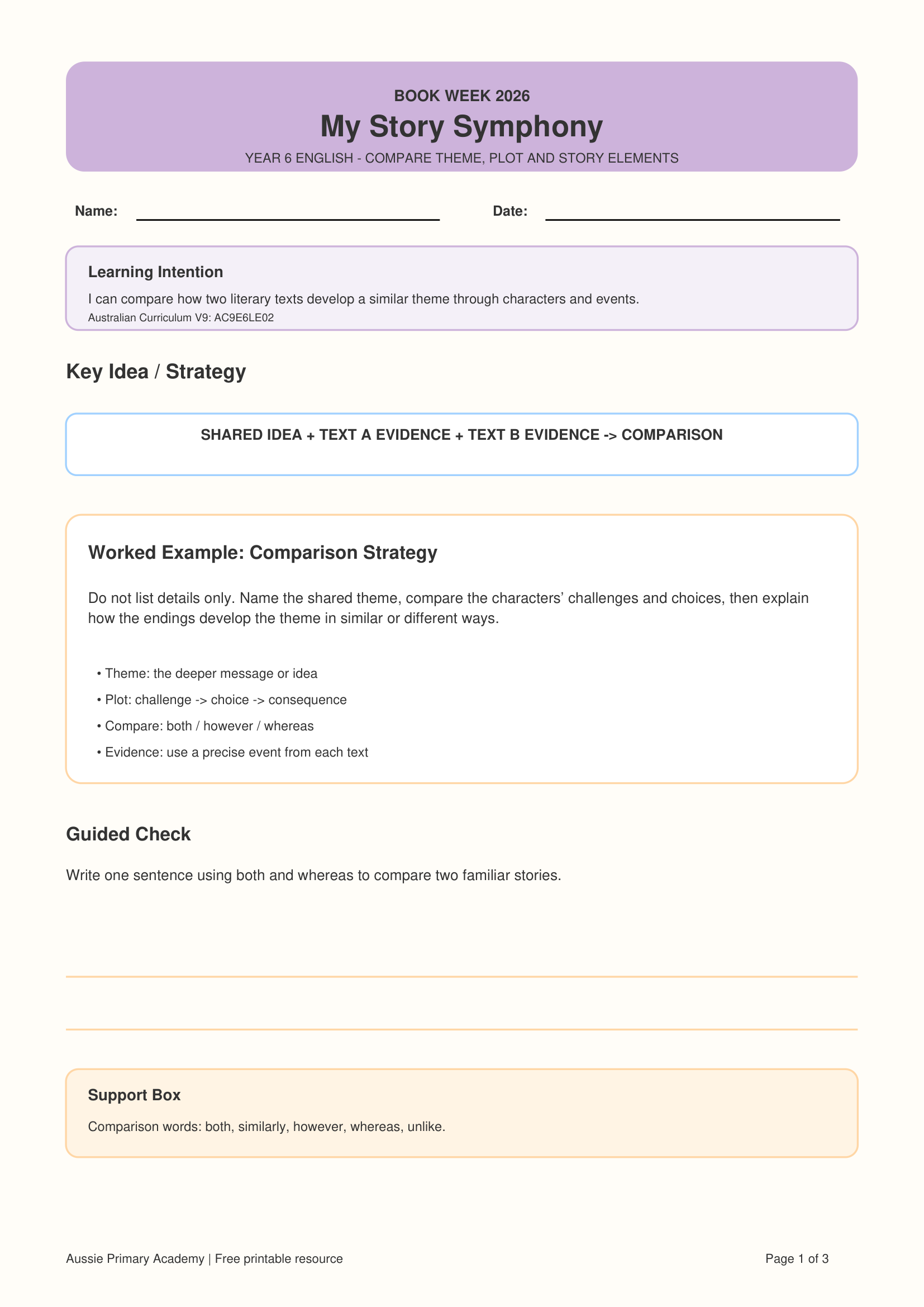
Preview of the first page · Full 3-page PDF includes student activities, answer key and teaching support
About This Year 6 Theme & Plot Worksheet
This Year 6 English resource asks students to make a genuine comparison between two literary texts, rather than writing two separate summaries.
Students identify a shared theme, compare the challenges and choices faced by characters, examine important plot events and use evidence from both texts to justify their conclusions.
It is part of the My Story Symphony – Book Week 2026 collection from Aussie Primary Academy.
Learning Intention
“I can compare how two literary texts develop a similar theme through characters and events.”
Australian Curriculum V9
AC9E6LE02
Supports students to identify similarities and differences in literary texts on similar topics, themes or plots.
Aussie Primary Academy is an independent publisher and is not endorsed by ACARA.
Skills Practised
- Identifying theme
- Comparing literary texts
- Comparing plots
- Comparing character responses
- Using evidence from two texts
- Making and justifying judgements
Teacher / Parent Tip
Encourage students to connect both texts within the same response rather than discussing each one separately.
Useful comparison words include both, similarly, however and whereas.
What's Included
- Year 6 learning intention
- Theme and plot comparison focus
- Two short literary texts
- Shared-theme identification
- Character challenge and choice comparison
- Plot similarities and differences
- Evidence from both texts
- Comparative written response
- Answer key and teaching support
Differentiation
Support: Use a comparison table and sentence frames such as “Both texts show…, but Text A…, whereas Text B…”.
Core: Students identify a shared theme and support a comparison using evidence from both texts.
Extend: Ask students to evaluate which text develops the shared theme more effectively and defend their judgement with evidence from both texts.
Why This Helps Readers
Comparing literary texts develops higher-order comprehension. Students must connect ideas across texts, identify meaningful similarities and differences, select evidence and explain how different stories can explore a related theme in different ways.
How to Use This Worksheet
- Whole class: Model the difference between summarising two texts and directly comparing them.
- Guided reading: Identify the shared theme before comparing character choices and plot events.
- Independent practice: Students complete the comparison using evidence from both texts.
- Writing connection: Use comparison sentence starters to develop a structured analytical paragraph.
Frequently Asked Questions
Does this worksheet include two texts?
Yes. The independent activity includes two short literary texts designed for direct comparison.
What should students compare?
Students compare theme, character challenges and responses, important plot events and the way each text develops its ideas.
Is an answer key included?
Yes. The resource includes suggested answers and teaching guidance.
Is this worksheet free?
Yes. The PDF is free to download and print for learning use.
Free Book Week Bonus
Continue with My Book Week Reading Adventure
Explore the free Foundation–Year 6 reading booklet with activities for story elements, characters, settings, vocabulary, creative response and book recommendations.
View the Free F–6 WorkbookExplore the Book Week Story Elements Collection
You've reached Year 6. You can return to any year level in the complete Book Week collection below.