Year 3 · Maths · Fractions · Free Printable
Unit Fractions & Models
Build understanding of unit fractions using equal parts and visual models before moving through the Year 3 Fractions pathway.
← Back to Year 3 Fractions Hub
Learning Intention
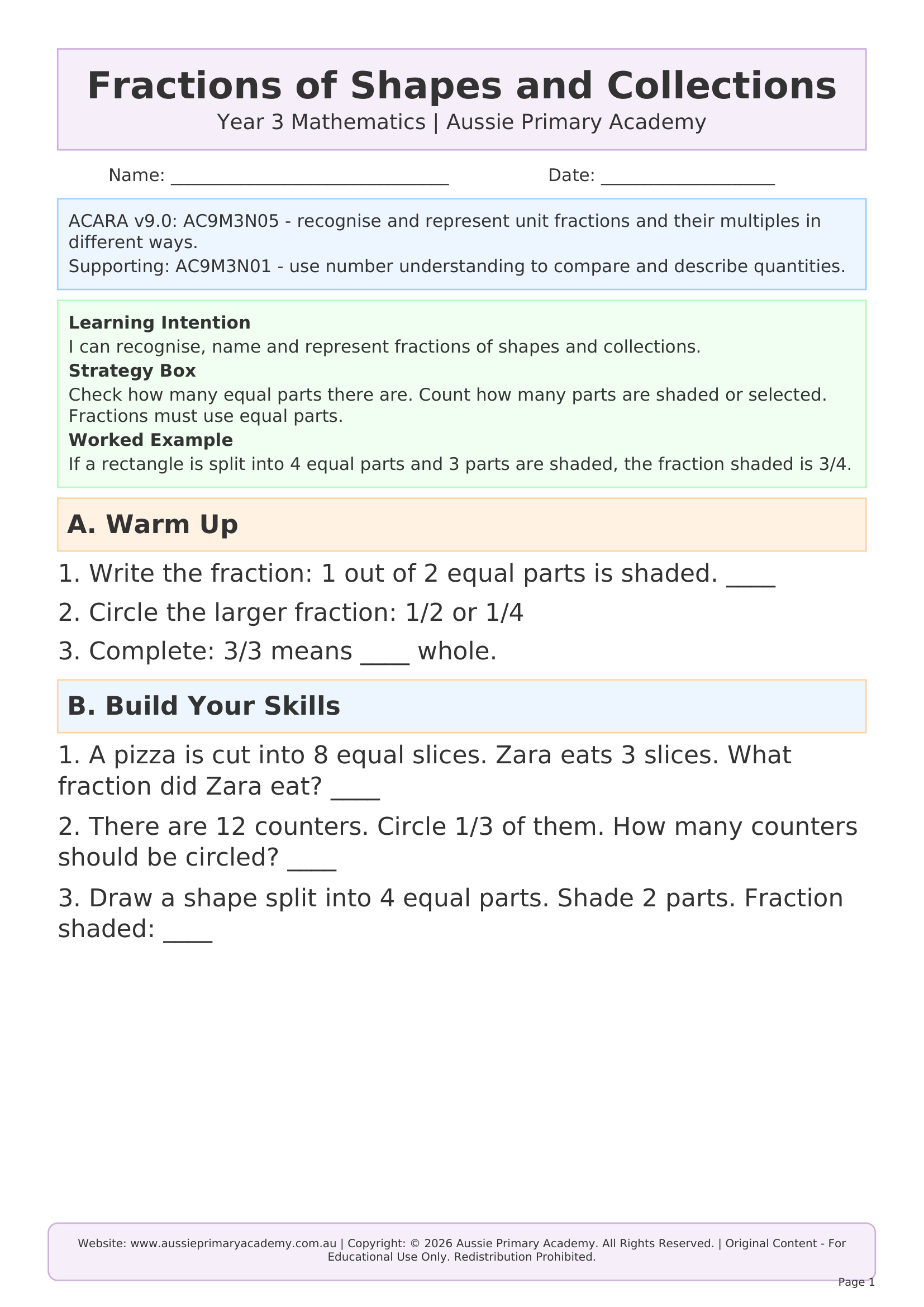
Students will model and represent fractions of shapes and collections.
Australian Curriculum
AC9M3N04
Recognise and use different models to represent the unit fractions 1/2, 1/3, 1/4, 1/5 and their multiples. Combine fractions with the same denominator to complete the whole using part-whole understanding.
Teacher Notes
Use fraction circles and counters. Start with unit fractions.
Skills Practised
- Fractions of shapes
- Fractions of collections
- Unit fractions
- Combining fractions with the same denominator
YEAR 3 FRACTIONS PATHWAY · 1 OF 4
Next: Multiples of Unit Fractions
Once students can recognise and represent unit fractions, move to multiples of unit fractions.
Continue learning
Want more structured Year 3 fractions practice?
Continue with the complete Year 3 Fractions Workbook for worked examples, visual models, practice, review and answers.
Complete Year 3 Fractions Workbook → More Learning Materials on Payhip →