Year 6 · English · Free Printable
Nominalisation
Transform verbs and adjectives into nouns and examine how nominalisation changes formal writing.
Worksheet Preview
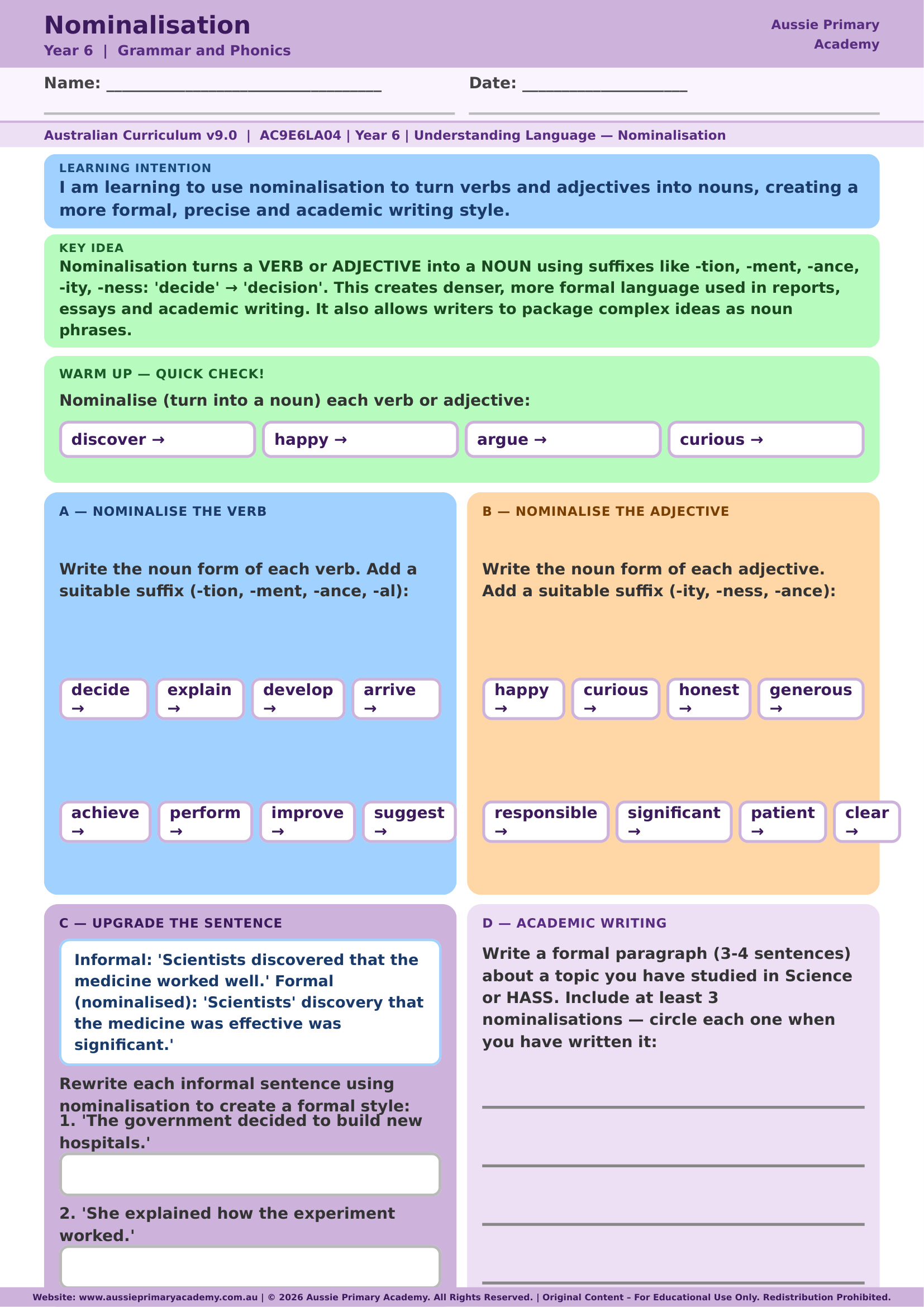
Learning Intention
Students transform verbs and adjectives into nouns to create more formal writing.
Australian Curriculum
Supports Year 6 English learning. (AC9E6LA04)
Teacher Notes
Compare informal and formal versions of the same sentence to highlight the effect.
Skills Practised
- Nominalisation
- Formal writing style
- Word class transformation
About This Worksheet
Nominalisation changes a verb or adjective into a noun, often making writing more formal and compact. This worksheet gives Year 6 students practice recognising and creating nominalised forms, then considering how the choice affects a sentence.
What Students Practise
- Identifying nominalised words in sentences
- Transforming verbs or adjectives into nouns
- Using nominalisation accurately in context
- Comparing informal and more formal sentence choices
How to Use It
Start by reviewing the base word and its word class. Ask students to identify the noun form and use it in a complete sentence. Then compare the original and revised sentences and discuss which sounds more formal and why.
Teacher Tip
Nominalisation is useful in formal and information writing, but students do not need to use it in every sentence. Encourage them to choose the clearest wording and notice when a nominalised sentence makes ideas more compact.
Parent Tip
When reading a nonfiction text together, look for words such as decision, movement or development. Ask your child which verb or adjective the noun is related to and how the word choice affects the sentence.